
Rinseless vs. Waterless Wash: Which Method Is Safer?
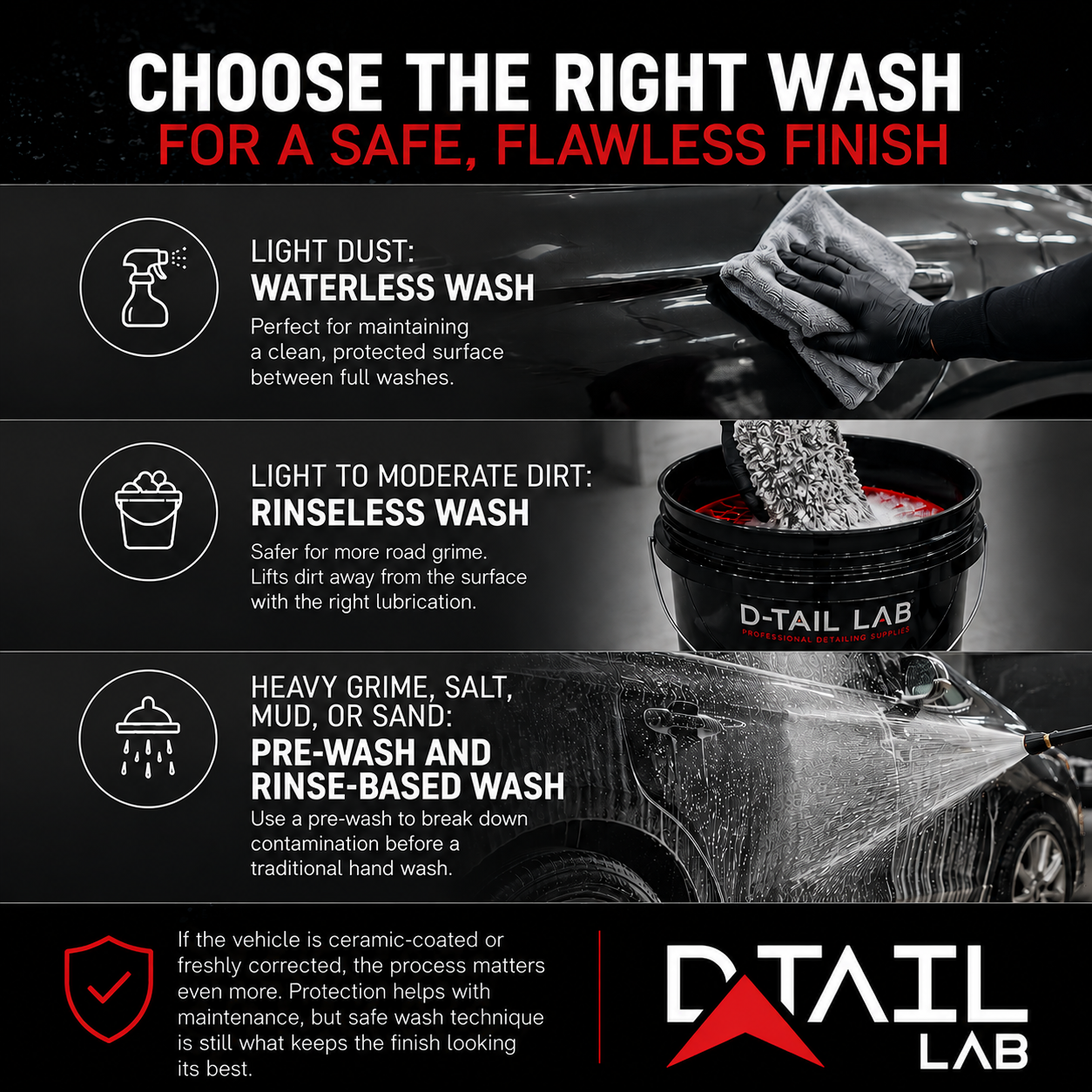
Modern detailing has made it possible to safely clean a vehicle with very little water—or, in some cases, without rinsing at all. But rinseless and waterless washing are not interchangeable methods. Each one has a specific purpose, a specific contamination limit, and a specific level of risk.
The safest choice depends less on convenience and more on what is actually sitting on the paint. Light dust, fingerprints, pollen, road film, winter salt, and dried mud do not require the same process. Choosing the wrong method can create unnecessary wash marring, especially on dark paint, recently corrected vehicles, or ceramic-coated finishes.
This guide explains the difference between rinseless and waterless washing, when each method is appropriate, and how to build a safer maintenance routine using D-TAIL LAB products.
What Is the Difference Between Rinseless and Waterless Washing?
The two methods are often grouped together because they use less water than a traditional hose wash. The key difference is how much cleaning solution and wash media are used to remove contamination.
Rinseless Wash
A rinseless wash uses a concentrated solution diluted in a bucket of water. The product surrounds and suspends dirt so it can be removed with a wash mitt, sponge, or multiple microfiber towels. The surface is then dried without a final rinse.
SYNERGY Rinseless Wash Concentrate - HI-Con Series is designed with surfactants and polymers that encapsulate contamination and leave a slick, low-friction surface during the wash process.
A rinseless wash is generally the more versatile low-water method because it provides more solution, more lubrication, and a better ability to manage light-to-moderate road film.
Waterless Wash
A waterless wash is sprayed directly onto the panel and wiped away with microfiber towels. There is no bucket, hose, or rinsing stage.
NEGATIVO Waterless Wash Detailing Spray provides high lubrication to lift light dust, fingerprints, pollen, and fresh surface contamination while minimizing friction during the wipe.
Waterless washing is fast and convenient, but it has a lower contamination limit. It should be reserved for surfaces that are already relatively clean.
Which Method Should You Use?
| Vehicle Condition | Recommended Method | Recommended D-TAIL LAB Product |
|---|---|---|
| Fingerprints, light dust, pollen, fresh bird residue | Waterless wash | NEGATIVO Waterless Wash Detailing Spray |
| Light-to-moderate dust and road film | Rinseless wash | SYNERGY Rinseless Wash Concentrate |
| Heavier road film, bug residue, oily traffic film | Pre-wash followed by contact wash | ROGUE Contactless Alka Pre-Wash |
| Mud, winter salt, sand, heavy contamination | Traditional rinse wash | ROGUE followed by ORIGIN Ultimate Shampoo |
Important: The safest wash method is the least aggressive method that can remove the contamination without forcing dirt across the paint.
Is a Rinseless Wash Safe for Ceramic Coatings?
Yes. A properly performed rinseless wash can be an excellent maintenance method for ceramic-coated vehicles. It is especially useful indoors, during water restrictions, in apartment garages, or between more intensive traditional washes.
A coating does not make paint scratch-proof. The coating can improve chemical resistance, water behavior, and ease of cleaning, but poor wash technique can still create swirls and marring. Safe maintenance depends on three factors:
- Using enough lubrication.
- Using clean, appropriate wash media.
- Knowing when contamination is too heavy for a low-water wash.
A rinseless product such as SYNERGY helps reduce friction by surrounding dirt with a slick solution. The wash media then needs to lift and retain that contamination away from the painted surface.
Choosing the Right Wash Media
The product provides lubrication, but the wash media controls how contamination is physically removed.
Microfiber Wash Media
D-LAB Microfiber Wash Series — Professional Contact Washing uses a dense microfiber pile designed to lift and suspend road film rather than pressing it directly against the paint.
For a rinseless wash, use multiple clean sides or multiple towels. Once a towel becomes visibly contaminated, move to a fresh section or replace it.
Rinseless Wash Sponge
The SYNERGY Rinse-less Wash & Clay Sponge combines a hex-pattern foam wash surface with a synthetic clay surface.
Use the foam side for routine rinseless washing. The synthetic clay side is intended for bonded contamination and should not be treated as an everyday wash surface. Clay can increase friction and may create light marring on sensitive paint, so always use heavy lubrication, work gently, and test a small area first.
Safe Rinseless Wash Process
- Inspect the vehicle. Look for mud, sand, salt buildup, or heavy traffic film. If these are present, use a traditional pre-wash and rinse process.
- Work in the shade. The panels should be cool to the touch.
- Prepare the solution. Dilute SYNERGY Rinseless Wash Concentrate according to the product instructions.
- Pre-spray the panel. Apply rinseless solution before contact to begin loosening contamination.
- Wash from the top down. The lower sections of the vehicle normally hold the heaviest contamination.
- Use straight, controlled passes. Avoid aggressive circular scrubbing.
- Keep the media clean. Use multiple towels, a grit-management method, or a properly cleaned wash sponge.
- Dry immediately. Use a clean, high-quality microfiber drying towel and light pressure.
For extra gloss or protection during drying, a light application of QUICX Ceramic Detailing Spray Sealant with SiO2 can be used as a drying aid when appropriate.
Safe Waterless Wash Process
- Confirm the vehicle is only lightly contaminated. Do not use a waterless wash on mud, sand, salt buildup, or a heavily dirty vehicle.
- Use several clean microfiber towels. One towel is rarely enough for an entire vehicle.
- Apply a generous amount of product. Mist NEGATIVO Waterless Wash Detailing Spray onto both the panel and the towel.
- Allow a short dwell time. Give the formula time to soften and surround light contamination.
- Wipe in one direction. Use light pressure and avoid repeatedly working the same dirty section of towel over the paint.
- Flip the towel frequently. Switch to a fresh side as soon as contamination becomes visible.
- Buff with a second towel. Use a clean towel to remove remaining residue and restore clarity.
Waterless washing is ideal for a garage-kept vehicle, show-car touch-ups, fresh fingerprints, light pollen, and spot cleaning. It should not be used simply because access to water is inconvenient when the vehicle is too dirty.
When a Traditional Wash Is the Safer Choice
Low-water methods are valuable maintenance tools, but they do not replace a traditional wash in every situation.
Use a traditional pre-wash and contact wash when the vehicle has:
- Visible mud or sand.
- Heavy winter salt buildup.
- Thick road film on lower panels.
- Heavy bug residue.
- Contamination inside panel gaps, wheel arches, and emblems.
Start with ROGUE Contactless Alka Pre-Wash to loosen traffic film before touching the paint. Follow with ORIGIN Ultimate Shampoo for a conventional contact wash.
For customers who want cleaning and protection in one maintenance step, VICE Wash & Coat Ceramic Shampoo can be incorporated into a traditional wash routine.
What About Bonded Contamination?
Rinseless and waterless products remove loose contamination. They do not replace chemical or mechanical decontamination when iron particles, mineral deposits, industrial fallout, or embedded contamination are bonded to the surface.
For iron and fallout, use PURGE pH Neutral Iron and Fallout Remover. For mineral deposits and water spots, use XCON Water Spot & Fallout Remover according to the product instructions.
After decontamination, inspect the paint before polishing or applying protection. Mechanical clay should be used only when necessary because it can create light marring that may require correction.
Maintaining Protection After the Wash
Regular maintenance products can help preserve gloss, slickness, and water behavior between more intensive detailing sessions.
- QUICX Ceramic Detailing Spray Sealant with SiO2: ideal for quick gloss enhancement and maintenance protection.
- PRODIGY Hybrid SiO2 Wet Coat Sealant: applied on a wet surface for fast protection during a traditional wash process.
- D-TAIL LAB Ceramic Coatings: long-term protection options for properly prepared paint.
Recommended D-TAIL LAB Wash Setup
For Light Touch-Ups
- NEGATIVO Waterless Wash Detailing Spray
- Several clean, plush microfiber towels
For Routine Rinseless Maintenance
- SYNERGY Rinseless Wash Concentrate - HI-Con Series
- D-LAB Microfiber Wash Series or the foam side of the SYNERGY Rinse-less Wash & Clay Sponge
- Clean microfiber drying towels
- QUICX as an optional maintenance topper
For Heavy Contamination
- ROGUE Contactless Alka Pre-Wash
- ORIGIN Ultimate Shampoo
- ORIGIN Pro Foam Cannon
- Professional contact-wash media and drying towels
Why These Methods Matter for Professional Detailers
For a professional detailer, the right wash method can reduce setup time, water use, and labour without compromising the finish.
Rinseless washing is particularly useful for:
- Mobile detailing where water access is limited.
- Indoor maintenance services.
- Dealership delivery preparation.
- Maintenance plans for coated vehicles.
- Winter washing in controlled environments.
Waterless washing is useful for final inspections, show preparation, isolated touch-ups, and light dust removal. The professional advantage comes from knowing when not to use it.
The Bottom Line
Waterless washing is safest for very light contamination. Use it for dust, fingerprints, pollen, and quick touch-ups on a vehicle that is already relatively clean.
Rinseless washing is the safer and more versatile low-water option for routine maintenance. It provides more solution, lubrication, and contamination management than a spray-and-wipe process.
A traditional pre-wash and rinse remains the safest method for heavy contamination. Mud, sand, road salt, and thick traffic film should be removed before contact.
The condition of the vehicle—not the convenience of the method—should determine the wash process.
Frequently Asked Questions
Can a rinseless wash scratch paint?
Any contact wash can create marring if there is insufficient lubrication, dirty wash media, excessive pressure, or too much contamination on the surface. A properly diluted rinseless product, clean media, and correct technique significantly reduce the risk.
Can I use a waterless wash on a ceramic-coated vehicle?
Yes, provided the vehicle only has light contamination. A ceramic coating does not make heavy dirt safe to wipe directly from the paint.
Do I need to rinse after using SYNERGY?
No final rinse is required when SYNERGY is used as a rinseless wash according to the product instructions. Wash one manageable section at a time and dry the surface after cleaning.
Can I use the clay side of the SYNERGY sponge during every wash?
No. The clay side is intended for bonded contamination, not routine maintenance washing. Use it only when necessary, with generous lubrication, light pressure, and a test spot.
When should I stop and switch to a traditional wash?
If you can see or feel loose grit, sand, mud, salt buildup, or heavy traffic film, switch to a pre-wash and rinse process before making contact with the paint.
Build a Safer Wash Routine
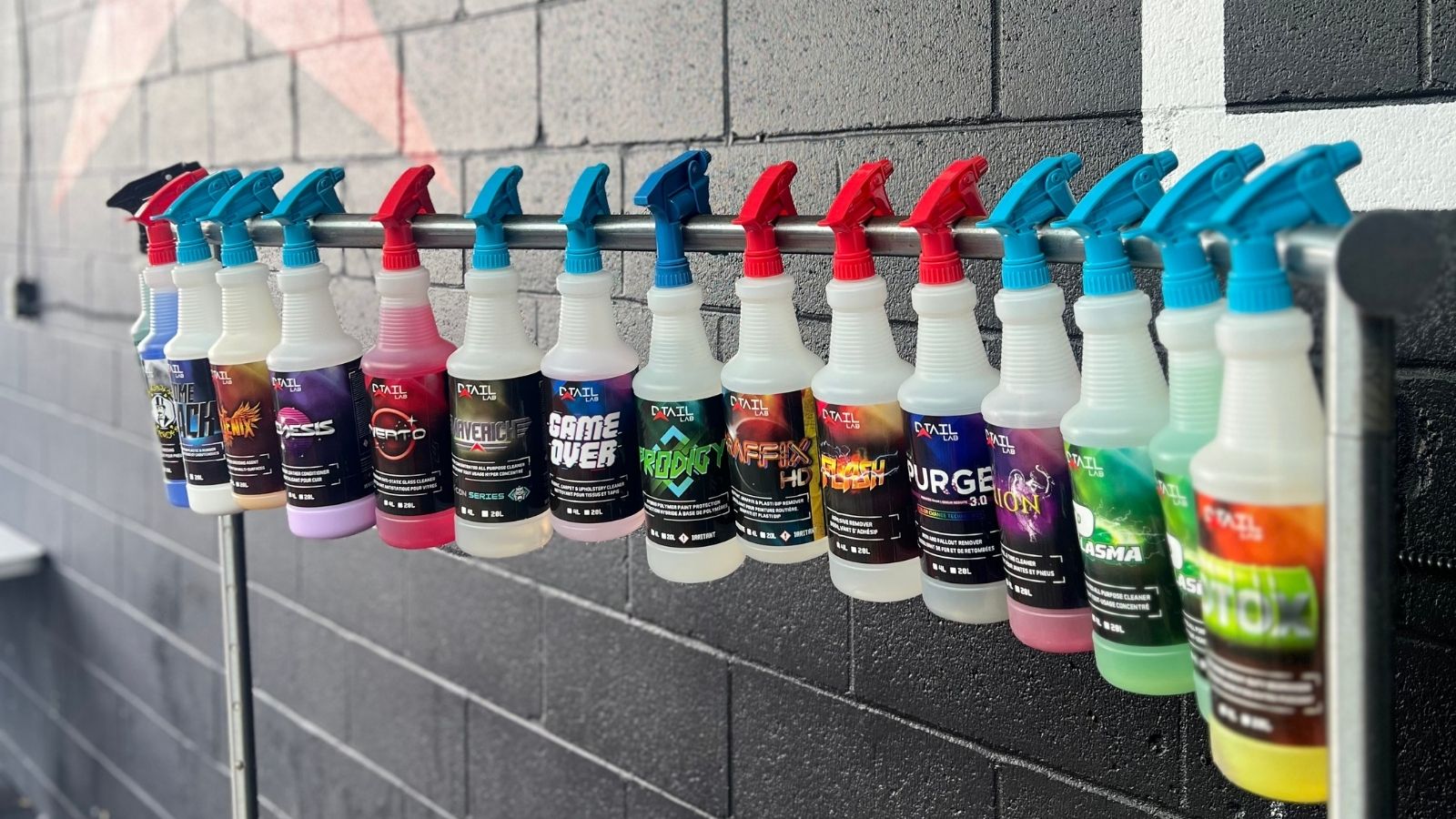
Explore the complete D-TAIL LAB professional detailing collection to build a wash process matched to the condition of the vehicle, the working environment, and the level of protection already on the paint.

Leave a comment
This site is protected by hCaptcha and the hCaptcha Privacy Policy and Terms of Service apply.